
£30–£400 UK iPhone Camera Repair Costs and Where to Save
- 4 days ago
- 7 min read
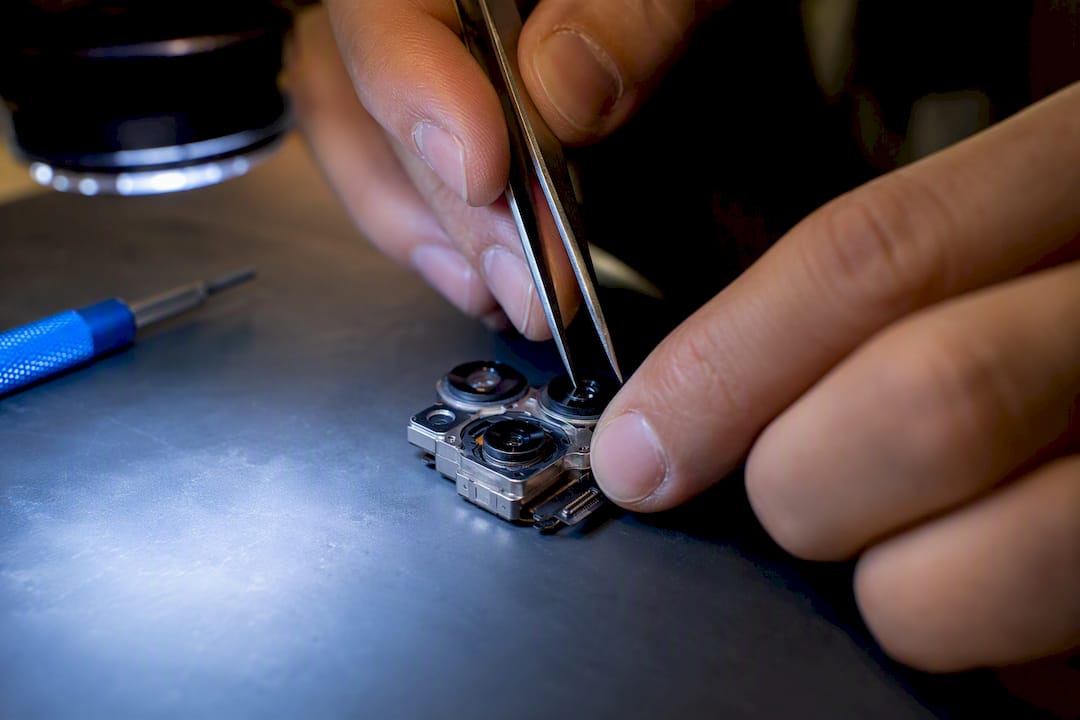
Most iPhone camera repairs in the UK generally cost from around thirty pounds up to several hundred pounds, depending on whether the issue involves a scratched lens cover, cracked lens, or full camera module failure. Lens glass repairs are usually at the lower end of the scale, lens replacements at a mid-range cost, and full module replacements at the higher end, especially on Pro and Max models. If your phone is under AppleCare, check that first. If not, a reputable independent shop usually offers the best value, though turnaround and warranty terms differ between repair routes.
TL;DR:
Lens glass repairs cost between £30 and £90, while lens replacements range from £60 to £220, depending on the model and lens type.
Full camera module replacements are the most expensive, reaching up to £400 on Pro and Max models with integrated sensors and tighter tolerances.
Repairs through Apple or authorized providers guarantee genuine parts but typically cost more, especially outside warranty coverage, whereas independents offer lower prices but vary in parts authenticity.
Most quotes include diagnostic fees, parts costs, labor complexity, and extras like expedited service or data backup, which can significantly influence the final price.
Repair cost thresholds for economic viability depend on the device’s second-hand value; repairs below 40% are usually worthwhile, while higher costs favor replacing the phone.
Table of Contents
How much does iPhone camera repair cost by damage type?
The price you’re quoted depends heavily on what’s actually broken, not just which iPhone you own. Camera faults fall into three broad categories, and each carries a very different bill.
Lens glass only is the cheapest fix. If the sapphire crystal covering the lens is cracked but the camera itself still focuses and takes clear photos, you’re looking at £30 to £90 in most UK shops. This is a surface repair, no sensor work involved.
Lens replacement costs more because the lens assembly sits closer to the sensor and often needs recalibration afterwards. Expect £60 to £220 depending on the model and whether it’s the wide, ultra-wide, or telephoto lens.
Full camera module replacement is the priciest scope. This is what you need when the sensor itself has failed, water has got into the housing, or the phone won’t focus at all. On older or mainstream models this can sit at £90 to £150, but on Pro and Max devices it climbs towards £400.
Here’s how that plays out across common models:
iPhone 11: lens glass £30–£50; full rear module replacement typically £90–£140.
iPhone 13: lens replacement £70–£140; rear module £120–£220.
iPhone 14 Pro/Pro Max: lens replacement £90–£180; full module replacement £180–£400.
Pro and Max models sit at the high end because their rear cameras are integrated units with tighter tolerances and more sensors packed into a smaller space. A 2026 cost breakdown from Cost Insider notes that newer Pro models often need the entire camera module swapped rather than just the lens cover, which multiplies the parts bill even when the visible damage looks minor. If you’re not sure which of these three scopes applies to your phone, a quick diagnostic check (covered in our back camera black screen guide) can save you paying for a bigger repair than you actually need.
Apple, authorised providers or independent shops: which is cheapest?
Where you take your phone changes both the price and what you’re actually getting for it. Each route has a different balance of cost, parts, and peace of mind.
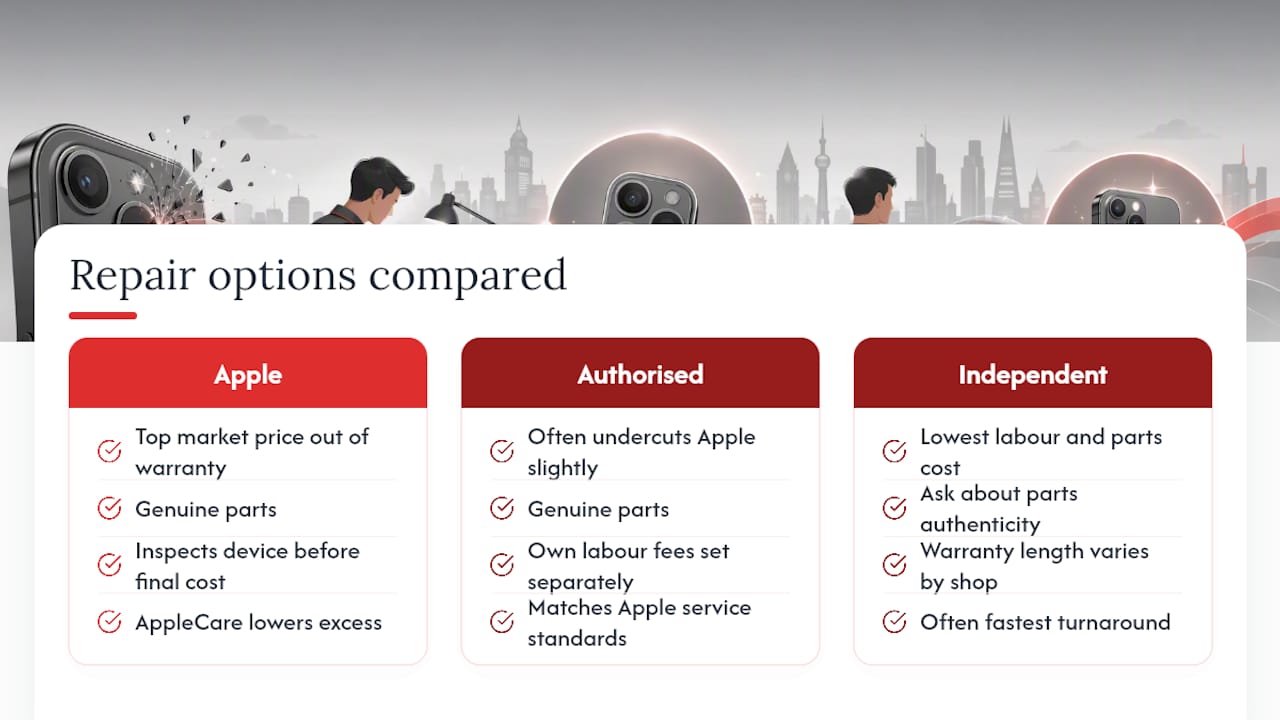
Apple uses genuine parts and publishes estimated fees on its own service and repair pages, which state that Apple or an authorised provider will inspect the device before confirming a final cost. This is the most predictable option if you’re still under AppleCare, since coverage can bring an eligible repair down to a small excess. Out of warranty, though, Apple’s rates tend to sit at the top of the market.
Authorised service providers often match Apple’s service standards and use genuine parts, but they set their own labour fees, which can undercut Apple slightly while still giving you official parts. They’re a solid middle ground if you want manufacturer-grade components without Apple’s exact pricing.
Independent repair shops generally offer the lowest labour and parts costs, and often the fastest turnaround, because they’re not tied to Apple’s booking system. The trade-off is that you need to ask directly about parts authenticity and warranty terms, since quality varies shop to shop. Cost Insider’s analysis points out that independent quotes can look attractive on price alone, but the parts provenance and warranty length are what actually determine whether that’s a genuine saving.
Pro Tip: If your iPhone is still within its first year or covered by AppleCare, always check eligibility before booking anywhere else. It’s the one scenario where Apple’s own pricing is almost certainly your cheapest route.
As a rule of thumb: favour Apple or an authorised provider if you’re still under warranty or plan to sell the phone soon, since a documented Apple repair can matter for resale value. Otherwise, a vetted independent shop is usually the better-value choice for mainstream models.
What actually makes up your camera repair quote?
A repair quote isn’t just “parts plus labour.” Several separate line items combine to produce the final figure, and understanding them helps you spot a fair price from an inflated one.
Diagnostic fee. Many shops charge a small assessment fee upfront, but most waive it if you go ahead with the repair. Always ask before you hand the phone over.
Parts tier. A basic lens cover costs far less than an aftermarket lens assembly, which in turn costs less than a full sensor module. Genuine Apple parts sit above both.
Labour complexity. Rear camera access on some models means removing the back glass or screen first, which adds time and risk. Sensor calibration and camera testing afterwards add further labour.
Extras. Expedited same-day service, data backup before repair, and, for mail-in services, shipping and handling can all add to the final bill. Flipsy’s cost breakdown shows professional repairs typically ranging from £79 to £399 once these extras are factored in, with Apple’s own out-of-pocket range sitting even higher without insurance.
Checklist: what to ask before booking a camera repair
A good repairer will answer these questions without hesitation. Hesitation, vague answers, or defensiveness are themselves useful information.
Where do your parts come from, and are they genuine or aftermarket?
How long is the warranty, and exactly what does it cover?
What’s the realistic turnaround for my specific model?
Is there a diagnostic fee, and is it waived if I proceed?
Will my data be backed up, and how is it kept private during the repair?
Treat these as red flags: no written warranty offered, evasive answers about parts, a quote suspiciously below every other shop you’ve called, and no visible reviews or evidence of previous repairs. A checklist covering just parts origin, warranty, and turnaround catches most of the risk in a poor independent repair before you’ve handed anything over.
Pro Tip: Before you hand your phone over, back it up, turn off Find My iPhone, and take a quick photo of any existing scratches or dents. It takes two minutes and protects you if there’s ever a dispute about what damage was already there.
Is it worth repairing, or should you just replace the phone?
Turnaround time in the UK varies by channel more than most people expect. In-shop repairs are often same-day to a few hours for straightforward lens jobs, stretching to a few working days for full module replacements that need parts ordered in. Mail-in services typically add several extra days for shipping in both directions, and turnaround factors like part availability and calibration time can push a “quick fix” into a week-long wait.
Express or warranty-backed repairs usually cost a little more, since you’re paying for priority slotting or genuine parts guaranteed against future fault.
The maths that actually matters is repair cost versus what the phone is worth second-hand. A rough guide:
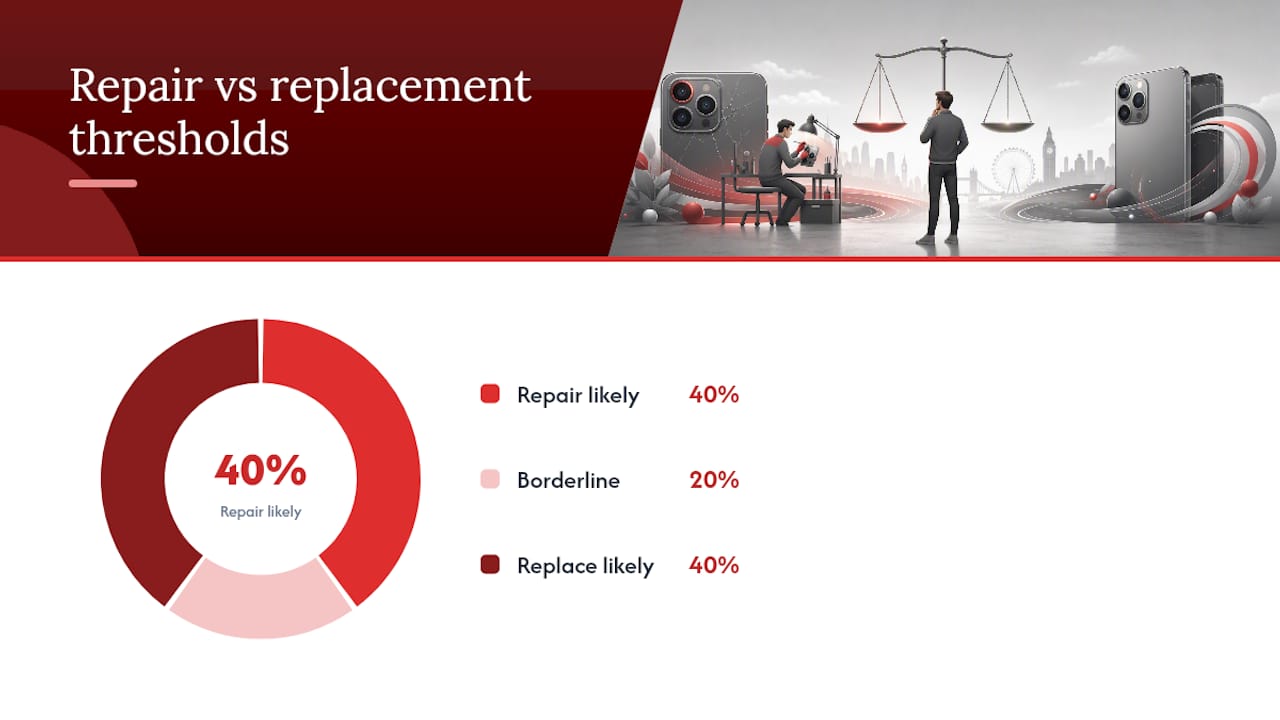
If the repair cost sits below roughly 40% of the phone’s second-hand value, repair almost always makes sense.
Between 40% and 60%, it’s a judgement call based on how long you plan to keep the device.
Above 60%, especially alongside other faults like a failing battery or cracked screen, replacement is usually the smarter spend.
An iPhone 11 with a £140 module repair against a £150 second-hand value is a marginal case. The same repair on an iPhone 14 Pro Max, worth several times more used, is an easy yes.
How Rapid Repairs prices camera repairs
Rapid Repairs London handles smartphone, tablet, and laptop repairs across north London, including component-level camera diagnostics for iPhone. We start every camera job with a proper inspection rather than guessing between a lens issue and a module fault, because that distinction is exactly what changes your quote from £50 to £300.
We’re upfront about where parts come from and back repairs with a clear warranty, and most camera jobs turn around within a day or two in-shop. If you want model-specific numbers before you book, our model repair cost breakdown covers common iPhones in more detail, and our charging port cost guide shows the same pricing approach applied to another common repair.
— Joshua
Book a camera diagnostic with Rapid Repairs
Rapid Repairs London is the local alternative to guessing your way through a repair quote over the phone: you get a proper inspection first, then a fixed price before any work starts, no surprise add-ons once the phone’s already in pieces.
Bring your iPhone in and we’ll diagnose the camera fault on the spot, whether it’s a scratched lens, a failed sensor, or something a software fix could solve for free. You’ll get a clear quote, genuine or trusted-grade parts depending on what you choose, and a warranty on the finished work. Most camera repairs are turned around within a day or two. Head to our iPhone repair page to check current pricing and book a slot, or visit us in north London if you’d rather talk it through in person.
Sources
Recommended
Comments