
iPhone model repair cost differences: 2026 guide
- Jun 29
- 9 min read
iPhone repair costs are defined by three variables: the model you own, the type of repair needed, and where you get it done. The gap between repairing an iPhone SE and an iPhone 16 Pro Max is not trivial. Apple out-of-warranty screen repairs range from £129 to £379 depending on the model, which means the wrong assumption about price could cost you hundreds. Understanding iPhone model repair cost differences before you book a repair is the single most useful thing you can do for your wallet.
1. How iPhone model repair cost differences break down by model
Repair pricing follows a clear pattern: older and simpler models cost less, newer and more complex models cost more. The iPhone SE (2nd and 3rd generation) sits at the lower end of the scale, with screen repairs from £129 out of warranty. The iPhone 16 Pro and Pro Max sit at the top, with screen repairs reaching £379.
Here is a practical overview of typical out-of-warranty screen repair costs by model category:
iPhone SE (2nd and 3rd gen): £129 screen repair. LCD display, simpler construction.
iPhone 12 and 13 series: £229–£279. OLED screens increase the base cost.
iPhone 14 and 14 Plus: £279–£309. Larger displays and more complex internal layout.
iPhone 15 Pro and Pro Max: £329–£379. Titanium frame and advanced OLED add to labour and parts cost.
iPhone 16 Pro and Pro Max: Around £379. The most expensive screen repairs Apple currently lists.
Battery replacements follow a similar pattern. Out-of-warranty battery replacements generally cost between £70 and £120 depending on model and battery size. Larger batteries in Plus and Pro Max models sit at the higher end of that range. That cost difference matters if you are deciding whether to repair or replace an ageing device.
Pro Tip: If you own an iPhone 12 or newer and your battery health has dropped below 80%, replacing the battery is almost always more cost-effective than buying a new handset.
2. AppleCare+ and how it changes the iPhone repair price comparison
AppleCare+ is the single biggest variable in iPhone repair pricing. With the plan active, screen repair fees drop to a flat £29 per incident regardless of model. That means a cracked iPhone 16 Pro Max screen costs £29 instead of £379. The saving is substantial.
AppleCare+ costs £149–£199 for two years of coverage. If you claim even one screen repair on a Pro model, the plan pays for itself. For users who regularly crack screens or drop their phones, the maths strongly favours buying the plan upfront.
The catch is timing. AppleCare+ must be purchased within 60 days of buying the device. If you skip it and crack your screen six months later, you are back to full out-of-warranty pricing. Knowing this before you buy a new iPhone is worth more than any repair discount.
3. Third-party versus Apple repair: cost differences and trade-offs
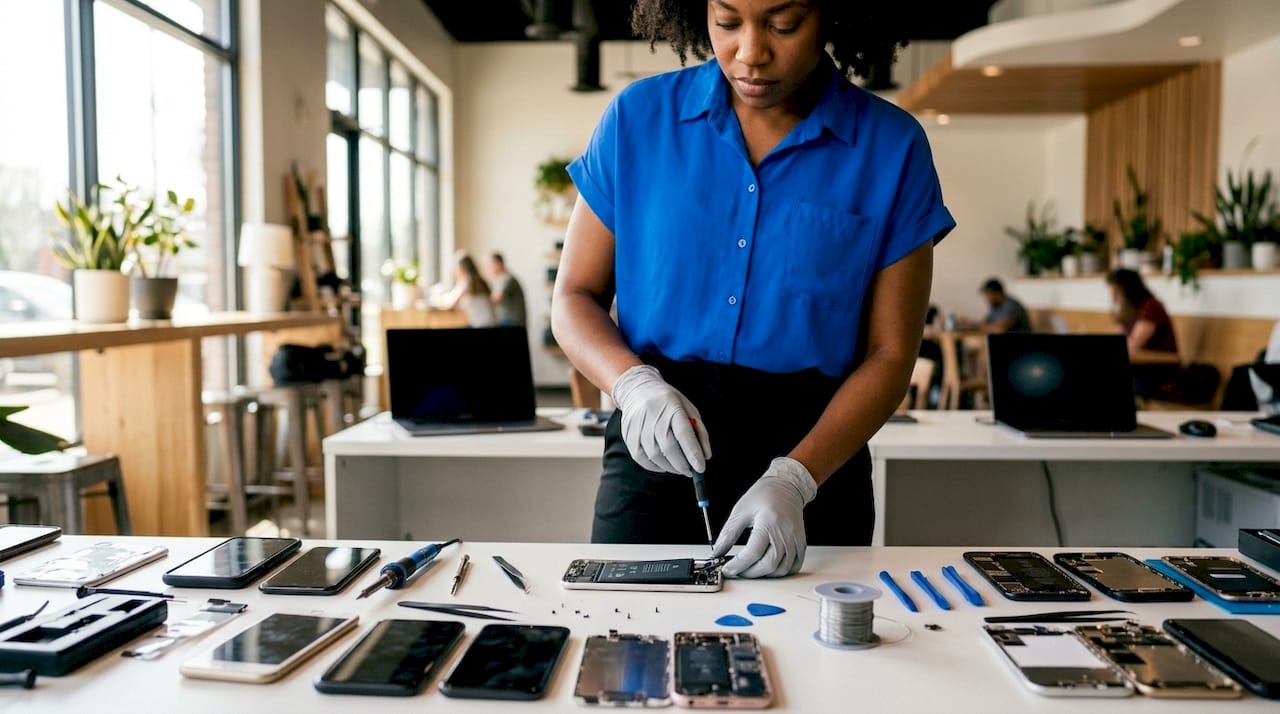
Third-party repair shops typically charge 20–40% less than Apple-authorised providers. For an iPhone 15 Pro screen, that translates to roughly £100–£220 at an independent shop versus £329–£379 through Apple. The saving is real, but so are the trade-offs.
The key risks with third-party repairs include:
Non-genuine parts: Cheaper screens may lack the colour accuracy and brightness of original Apple displays.
Feature loss: Face ID, True Tone, and auto-brightness can stop working if the replacement screen is not properly paired to the device.
Warranty impact: Any remaining Apple warranty or AppleCare+ cover may be voided if a non-authorised technician opens the device.
Software recalibration: Without professional tools, key features often fail even when the physical repair looks correct.
Not all independent shops carry the same risk. Apple Authorised Service Providers operate outside Apple’s own stores but use genuine parts and trained technicians. They offer a middle ground on price while preserving your warranty. When comparing iPhone repair service costs, checking whether a shop is an Apple Authorised Service Provider is the first question to ask.
Pro Tip: Ask any independent repair shop whether they use genuine Apple parts or OEM-equivalent components, and whether they can recalibrate True Tone after a screen replacement. A reputable shop will answer both questions confidently.
4. DIY repair kits: when they save money and when they backfire
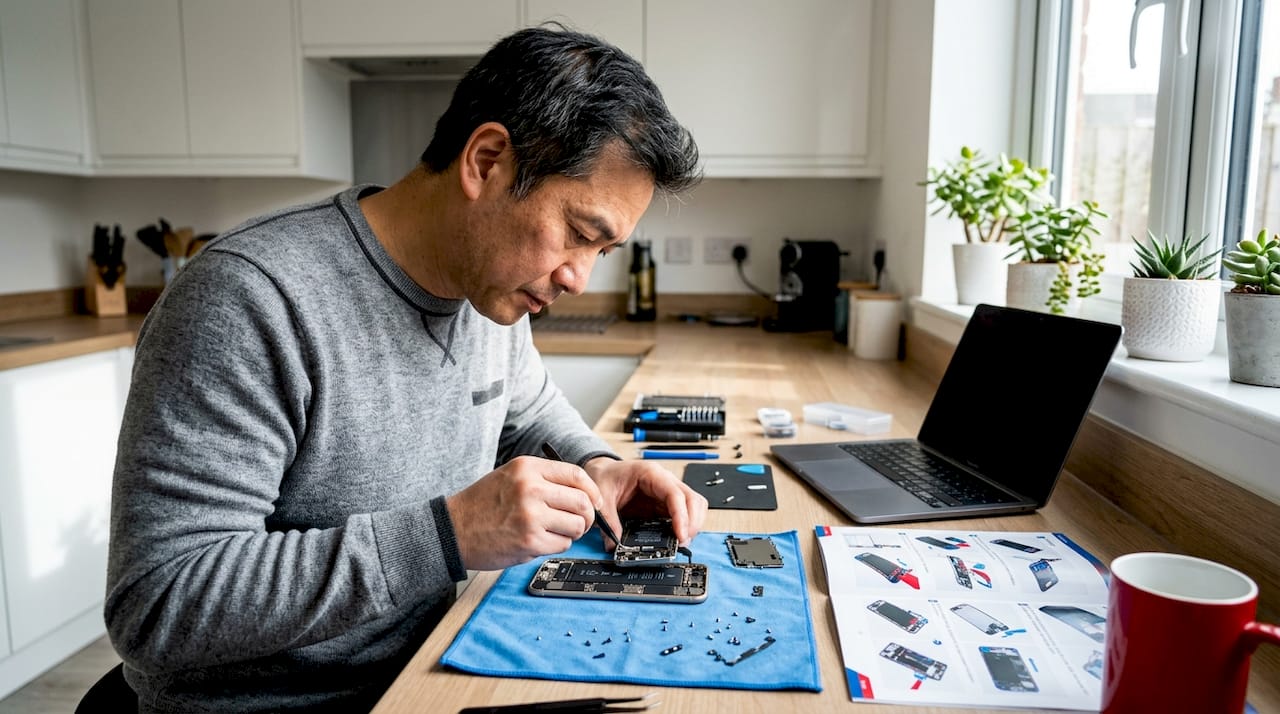
DIY repair kits cost between £60 and £180 depending on model. On paper, that looks like a significant saving against Apple’s out-of-warranty prices. In practice, the risks often outweigh the savings for most users.
The main concerns with DIY repairs are:
Water resistance: Opening an iPhone breaks the adhesive seal. Reassembling it correctly requires specialist tools and materials. Most DIY kits do not include them.
Internal damage: iPhone internals are tightly packed. One slipped tool can damage the logic board, Face ID sensor, or battery connector.
Warranty void: Any DIY repair immediately voids your remaining Apple warranty.
Feature loss: Replacing a screen without the correct software pairing tools will disable True Tone and may affect Face ID on iPhone 12 and later models.
Industry experts caution that DIY kits are generally unsuitable for most users without prior repair experience. The cost saving disappears quickly if a mistake requires a professional repair on top of the failed DIY attempt.
DIY is a reasonable option for experienced technicians working on older models like the iPhone 8 or iPhone SE, where the internal layout is simpler and the stakes are lower. For anything from iPhone 12 onwards, professional repair is the safer and often more economical choice when you factor in the risk of compounding damage.
5. OLED versus LCD: the technical driver behind price differences for iPhone repairs
The shift from LCD to OLED is the single biggest technical reason why repair costs increase with newer iPhone models. Apple introduced OLED displays with the iPhone X in 2017. Every Pro model since then uses OLED, and from the iPhone 12 onwards, the entire main lineup moved to OLED.
OLED panels are more expensive to manufacture and more fragile to handle during repair. They also require software pairing to the device’s logic board to function correctly. Without that pairing, features like True Tone, auto-brightness, and accurate colour rendering do not work properly.
Here is how display technology affects repair cost by model group:
Model group | Display type | Typical screen repair cost |
iPhone SE (2nd and 3rd gen) | LCD | £129 |
iPhone 11 | LCD | £169 |
iPhone 12 and 13 series | OLED | £229–£279 |
iPhone 14 and 15 series | OLED | £279–£379 |
iPhone 16 Pro and Pro Max | OLED (ProMotion) | Around £379 |
Size also matters. Plus, Pro, and Max variants use larger panels, which cost more to produce and replace. The specialised calibration required for True Tone and Face ID on iPhone 12 and later models adds labour time, which feeds directly into the final repair bill.
You can find a broader iPhone repair cost overview covering Apple, Google, and Samsung models if you want to compare across brands.
6. Back glass and other repairs: the costs most users overlook
Screen and battery repairs get most of the attention, but back glass and other component repairs also vary significantly by model. The iPhone 8 through to the iPhone 11 series introduced glass backs, and cracking the rear panel is a common issue. Back glass repairs on older models are relatively affordable through independent shops.
From the iPhone 12 onwards, back glass replacement became significantly more complex. Apple’s repair process for these models involves replacing the entire rear housing rather than just the glass panel. That makes back glass repair one of the most expensive out-of-warranty fixes on newer iPhones.
Charging port and speaker repairs are generally more consistent across models, though Pro models with more complex internal layouts can still attract higher labour costs. If you are weighing up the cost to fix iPhone models beyond just the screen, it pays to get a full quote that covers all damaged components at once.
7. How to get the best value on iPhone repair service costs
Getting the best value on a repair comes down to three steps: know your model, know your warranty status, and compare quotes before committing.
Start by checking whether your device is still under Apple’s standard one-year warranty or covered by AppleCare+. If it is, use it. A £29 screen repair under AppleCare+ is always better than a £200 independent repair. If your warranty has expired, the calculation changes.
For out-of-warranty repairs, compare quotes from Apple directly, Apple Authorised Service Providers, and reputable independent shops. The price differences for iPhone repairs between these three options can be significant, particularly on Pro models. A trustworthy independent shop will be transparent about parts quality and will tell you upfront whether your model requires software recalibration after a screen replacement.
Knowing the signs your iPhone needs repair early can also save money. Catching a battery issue before it causes further damage is far cheaper than dealing with a swollen battery that has cracked the screen from the inside.
Key takeaways
iPhone model repair cost differences are driven by display technology, model complexity, and service provider, with OLED Pro models costing up to three times more to repair than older LCD handsets.
Point | Details |
Model determines base cost | Screen repairs range from £129 for iPhone SE to £379 for iPhone 16 Pro Max out of warranty. |
AppleCare+ cuts costs sharply | A flat £29 screen repair fee applies to any model, making the plan worthwhile on Pro models. |
Third-party shops cost less but carry risks | Savings of 20–40% are possible, but feature loss and warranty impact are real concerns. |
OLED drives higher repair prices | All iPhone 12 and later models use OLED, which costs more to replace and requires software pairing. |
DIY is rarely worth it on modern iPhones | Kits cost £60–£180 but risk voiding warranties and disabling Face ID or True Tone. |
Joshua’s take on navigating iPhone repair costs
Why cheap repairs often cost more in the long run
I have seen the same pattern repeat itself at Rapidrepairsldn more times than I can count. Someone brings in an iPhone 14 Pro that has already been through a cheap repair. The screen is dim, Face ID has stopped working, and True Tone is gone. The original repair saved them £80. Fixing the damage from that repair costs them £150 more than the authorised option would have.
The misconception I hear most often is that all screen replacements are equal. They are not. On any iPhone from the 12 onwards, the screen is paired to the logic board at the software level. Swap it without the right tools and you lose features that most people use every day. That is not a minor inconvenience. It is a meaningful reduction in what your phone can do.
My honest advice: if your iPhone is a Pro model or newer than the iPhone 11, do not let price alone drive your repair decision. Check whether the shop uses genuine or OEM-equivalent parts, and ask specifically whether they can restore True Tone after the repair. If they hesitate or cannot answer, walk away. The £30 saving is not worth it.
AppleCare+ is genuinely good value if you buy it at the point of purchase. I rarely recommend extended warranties, but this one is the exception on Pro models. One screen repair on an iPhone 15 Pro Max and it has paid for itself twice over.
— Joshua
Rapidrepairsldn: transparent iPhone repairs across all models
Rapidrepairsldn repairs iPhones across the full model range, from the iPhone SE through to the iPhone 16 Pro Max. Every repair uses quality parts, and the team is upfront about pricing before any work begins. There are no hidden fees and no surprises on collection.
Whether you need a screen replacement, battery swap, or back glass repair, Rapidrepairsldn’s technicians handle the software recalibration that newer models require. True Tone, Face ID, and auto-brightness are restored as part of the repair process, not treated as optional extras.
Book your repair or get a quote through the iPhone repair page and see fixed prices for your specific model before you commit.
FAQ
How much does it cost to fix an iPhone screen out of warranty?
Apple charges £129–£379 depending on the model, with Pro and Pro Max models at the higher end. Independent repair shops typically charge 20–40% less.
Does AppleCare+ cover screen repairs on all iPhone models?
Yes. AppleCare+ reduces screen repair fees to a flat £29 per incident regardless of which iPhone model you own, making it particularly valuable on Pro models.
Why do newer iPhones cost more to repair than older ones?
Newer iPhones use OLED displays, which are more expensive to produce and require software pairing after replacement. OLED screen repairs cost significantly more than the LCD screens found in older models like the iPhone SE and iPhone 11.
Is it safe to use a third-party repair shop for my iPhone?
Reputable independent shops and Apple Authorised Service Providers offer reliable repairs at lower prices. The risk comes from shops using non-genuine parts without proper recalibration tools, which can disable Face ID and True Tone on iPhone 12 and later models.
Are DIY iPhone repair kits worth buying?
DIY kits cost £60–£180 but carry real risks including warranty voidance and feature loss. They are only suitable for experienced users working on older, simpler iPhone models.
Recommended
Comments