
iPhone repair scams in the UK: what you need to know
- 4 days ago
- 6 min read

Dodgy repair shops are a real and growing problem for iPhone users across the UK. The most common tactics include fabricated faults, counterfeit parts, hidden fees, and outright data theft. Knowing what to look for before you hand over your device can save you money, protect your personal information, and prevent further damage to your phone.
Here are the key warning signs to keep in mind:
A shop insisting you hand over your passcode before any hardware repair
Vague or verbal-only quotes with no written breakdown
Pressure to agree to extra work on the spot
No warranty offered on parts or labour
Refusal to return your device without paying an undisclosed fee
Prices that seem unusually low compared to typical repair costs in the UK
Rapidrepairsldn uses certified repair professionals who work with genuine parts and provide transparent pricing, making it a reliable benchmark for what a trustworthy repair experience should look like.
Table of Contents
Common iPhone repair scams you need to recognise
Understanding how each scam works makes it far easier to spot one in progress. These are the tactics used most frequently by unscrupulous repair shops in the UK.
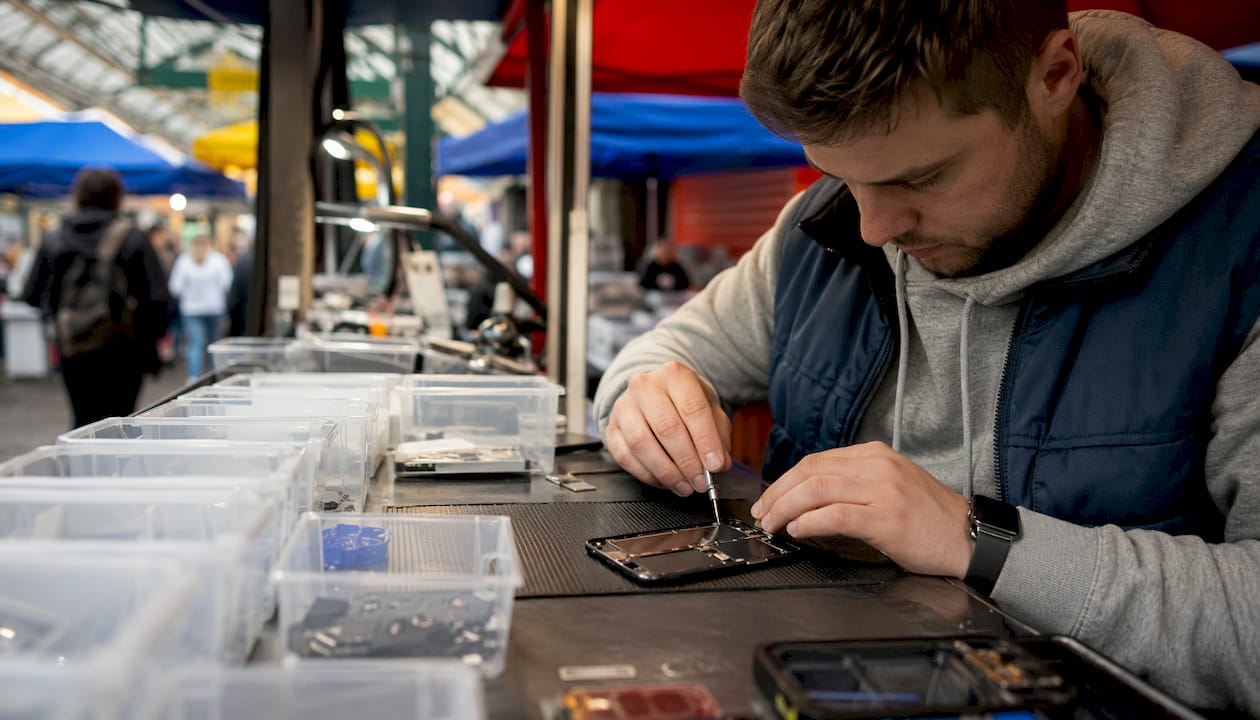
Fabricated and exaggerated faults

Some technicians open your device, then claim to have discovered a serious new problem that conveniently requires expensive additional work. Shops often invent or greatly exaggerate faults to inflate the final bill. The fix is simple: always request a fixed-price written estimate before leaving your device, and make clear that no additional work should begin without your explicit approval.
Counterfeit and substandard parts
You pay for a quality repair, but the screen or battery installed is a cheap imitation. Non-genuine replacement parts degrade performance, drain the battery faster, and can create safety risks. A counterfeit battery, for example, may lack the thermal protection of a genuine Apple component. The price difference between a genuine OEM screen and a low-cost aftermarket unit can be substantial, yet some shops charge you OEM prices while fitting the cheaper part.
Hidden fees and the “hostage” tactic
Some shops hold your device and refuse to return it until you pay a “bench fee” or “diagnostic fee” that was never mentioned upfront. This is essentially holding your property to ransom. If you did not sign a work order that clearly lists any diagnostic charge, you have grounds to dispute it.
High pricing and unnecessary upsells
A technician may tell you your phone has a virus, that the software needs “optimising,” or that several components are on the verge of failure. Modern iOS is sandboxed, meaning genuine malware infections are extremely rare on an unmodified iPhone. These upsells are almost always unnecessary, designed to add £30–£50 or more to your bill for work that either does nothing or was never needed.
Warranty void threats
Pressure tactics such as claiming warranty voidance to force an immediate costly repair are common and often false. UK consumer law gives you the right to seek a second opinion or use a different repairer. A shop telling you that getting another quote will void your warranty is using a scare tactic, not stating a legal fact.
Non-transparent receipts and on-site repair insistence
Reputable shops provide a written receipt that lists the parts used, their origin (genuine or third-party), the labour charge, and any warranty terms. A shop that refuses to put this in writing, or insists the repair must be done while you wait with no documentation, is a red flag. Transparency on paper is a basic standard, not a favour.
Data snooping
When you hand over your phone, you are also handing over access to your photos, messages, banking apps, and saved passwords. Unethical technicians have been caught browsing personal content or copying sensitive data. A technician replacing a cracked screen has no legitimate reason to ask for your passcode.
How to avoid iPhone repair scams in the UK
Protecting yourself comes down to a few consistent habits before, during, and after any repair.
Before you hand over your device:
Get a written, itemised estimate. For quotes above £200, consumer experts recommend obtaining a second opinion with a diagnostic fee of £50–£75 to verify the charge.
Check Google reviews carefully. Look at the one-star reviews, not just the overall rating. A cluster of five-star reviews posted on the same day with generic text is a sign of fake reviews.
Ask whether the shop uses genuine Apple parts or third-party alternatives, and get the answer in writing.
Verify the shop has a fixed physical address and has been trading for a reasonable period.
During the repair process:
Do not sign a blank or incomplete work order.
Confirm that any additional work requires your approval before it begins.
Ask for the old parts back after the repair. A reputable shop will return them without hesitation.
After collection:
Test your phone thoroughly before leaving the shop. Check the screen for dead zones, test Face ID or Touch ID, and verify the camera and speakers. Face ID and Touch ID components are paired to the logic board, so damage during a screen repair can cause biometric failures that are expensive to fix.
Check the repair cost differences across iPhone models so you know what a fair price looks like before you walk in.
Pro Tip: Back up your iPhone to iCloud or your computer before any repair visit. If something goes wrong during the repair, you will have a full copy of your data ready to restore.
If you suspect a scam has already occurred, report it to Citizens Advice, Trading Standards, or Action Fraud. Keep all written estimates, receipts, and any messages from the shop as evidence.
How to protect your personal data during an iPhone repair
Your data is often at greater risk than your device during a repair. Taking a few steps before drop-off can prevent a serious privacy breach.
What Apple advises:
Apple advises never to provide your device passcode to any repair shop. A passcode gives full access to every app, account, and file on your phone. If a technician insists on your passcode for a hardware repair such as a screen or battery replacement, that is a major red flag for potential data theft.
Steps to take before drop-off:
Back up your iPhone fully via iCloud or iTunes.
Enable “Stolen Device Protection” in your iPhone settings. This feature adds an extra layer of security that limits what someone can do with your device even if they know your passcode.
Consider a factory reset if you are leaving the phone for an extended period or with a shop you are not fully confident about. You can restore from your backup once the repair is complete.
Sign out of iCloud before handing over the device. This prevents access to your Apple account, photos, and synced data.
Remove any saved payment cards from Apple Pay.
What to check immediately after collection:
Test Face ID or Touch ID before leaving. Biometric components like Face ID are hardware-bound and can be damaged during repairs, sometimes requiring a costly motherboard replacement to fix. Catching the problem at the shop is far easier than raising it days later.
Check that no new apps have been installed and that your Apple Account is still secure.
Review your iCloud sign-in activity for any unfamiliar devices or locations.
Choosing a shop with certified technicians who follow clear data-handling procedures removes most of this risk from the outset. Rapidrepairsldn’s technicians do not require passcodes for hardware repairs and work to a transparent process that keeps your data secure throughout.
Key takeaways
Recognising iPhone repair scams before they happen is the most effective way to protect both your device and your personal data.
Point | Details |
Never share your passcode | Apple advises that no repair shop needs your passcode; insisting on it is a red flag for data theft. |
Always get a written estimate | For quotes above £200, seek a second opinion with a diagnostic fee of £50–£75 to verify the charge. |
Test biometrics before leaving | Face ID and Touch ID are paired to the logic board; check them immediately after collection. |
Know your consumer rights | Warranty void threats are often false; UK consumer law protects your right to seek a second opinion. |
Rapidrepairsldn | Uses certified technicians, genuine parts, and transparent pricing for trustworthy iPhone repairs in London. |
Rapidrepairsldn: trusted iPhone repairs without the worry
If you have read this far, you already know what a bad repair experience looks like. Rapidrepairsldn is the straightforward alternative: a London-based repair shop where certified technicians fix iPhones, iPads, and laptops using genuine parts, with clear pricing given upfront and a warranty on every repair.
There are no surprise fees, no pressure to approve work you did not ask for, and no request for your passcode. Whether you need a screen replacement, a battery swap, or a more complex fix, you will know exactly what you are paying and why before anything is touched. You can see the full range of iPhone repair services on the Rapidrepairsldn website, or visit the shop in Finchley for a same-day quote. If your device needs attention, book your repair today and get it sorted by people who know what they are doing.
Recommended
Comments